 CALL US: 702-877-1887

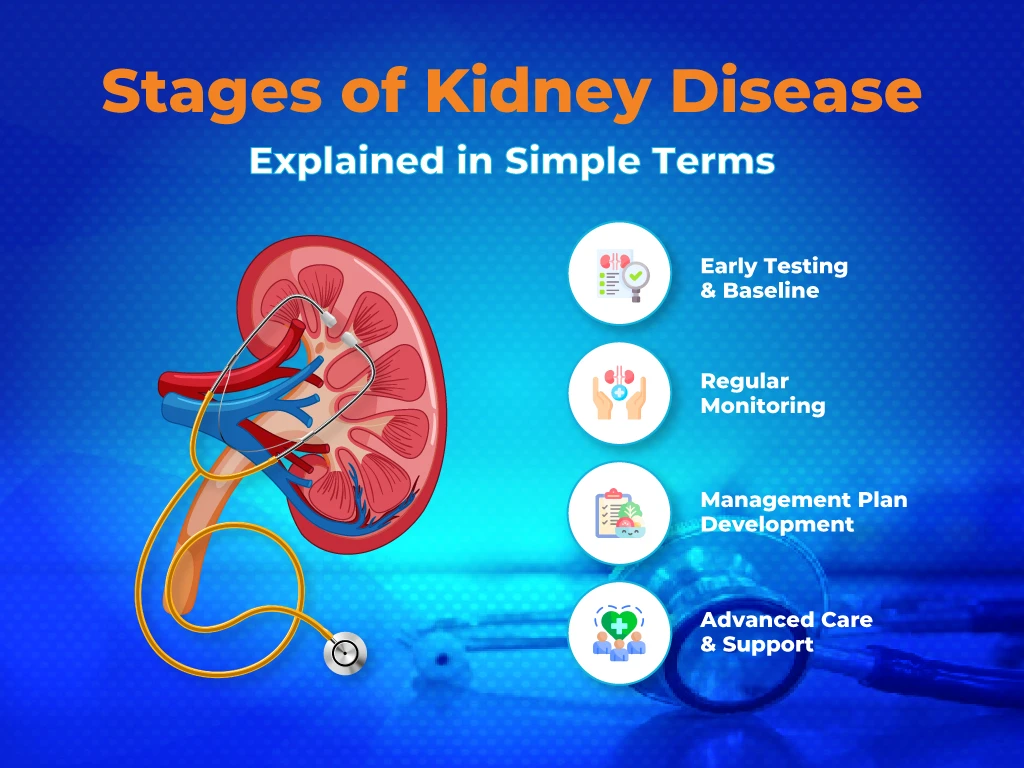
Kidney disease can be confusing, especially when you hear terms like “stages,” “eGFR,” or “chronic kidney disease.” Understanding the stages of kidney disease can help you feel more informed, prepared, and confident in managing your health. This guide breaks down the stages of kidney disease in simple, easy-to-understand terms and explains what they may mean for your care.
What Do the Stages Mean?
Kidney disease is divided into five stages, based on a blood test called eGFR (estimated glomerular filtration rate). This number shows how well your kidneys are filtering waste from your blood. The higher the eGFR, the better your kidneys are functioning. As the number goes down, kidney function decreases.
Stage 1: Mild Kidney Damage
- Kidney function is still normal or near normal
- eGFR is 90 or higher
- Other evidence of kidney damage, like albuminuria, hematuria, structural issues (cysts), history of transplant, etc.
At this stage, many people feel fine and may not have symptoms. Kidney disease is often found through routine lab work. Care usually focuses on identifying the cause, controlling blood pressure or blood sugar, and protecting kidney health.
Stage 2: Mild Decrease in Kidney Function
- Slight loss of kidney function
- eGFR between 60 and 89
Most people still do not notice symptoms. Treatment continues to focus on slowing progression through lifestyle changes, medications, and regular monitoring.
Stage 3: Moderate Kidney Disease
Stage 3 is often divided into two parts:
- Stage 3a: eGFR 45–59
- Stage 3b: eGFR 30–44
At this stage, some people may begin to notice symptoms such as fatigue, swelling, or changes in urination. Your care team may adjust medications, recommend dietary changes, and monitor labs more closely.
Stage 4: Severe Decrease in Kidney Function
- eGFR between 15 and 29
Kidney function is significantly reduced, and symptoms may become more noticeable. This stage is an important time for education and planning. Your healthcare team will focus on managing complications and discussing future treatment options so you can make informed decisions.
Stage 5: Kidney Failure
- eGFR below 15
At this stage, the kidneys can no longer adequately filter waste on their own. Treatment options may include dialysis or a kidney transplant. While this can sound overwhelming, many patients live full lives with the right treatment and support.
Why Knowing Your Stage Matters
Understanding your stage helps guide your care plan, including:
- How often you need lab tests and appointments
- Which medications or lifestyle changes may help
- When education and planning for future options begin
Everyone’s kidney journey is different. Not everyone progresses through all stages, and many people remain stable for years.
Final Thoughts
Learning about the stages of kidney disease is an important step toward taking an active role in your health. While a diagnosis can feel overwhelming, knowledge empowers you to ask questions, make informed choices, and partner closely with your care team. Remember, kidney disease is a journey, not a race. With regular care, healthy habits, and ongoing support, you can move forward with confidence, one step at a time.
Stay informed and take control of your kidney health!

Getting diagnosed with an organ disease can often be one of the scariest moments of Read more

A large percentage of the population suffers from some form of back problems, and if Read more

When it comes to your body, there is a lot of things that can go Read more

Many of us walk around living our day to day lives without even realizing that Read more