 CALL US: 702-877-1887

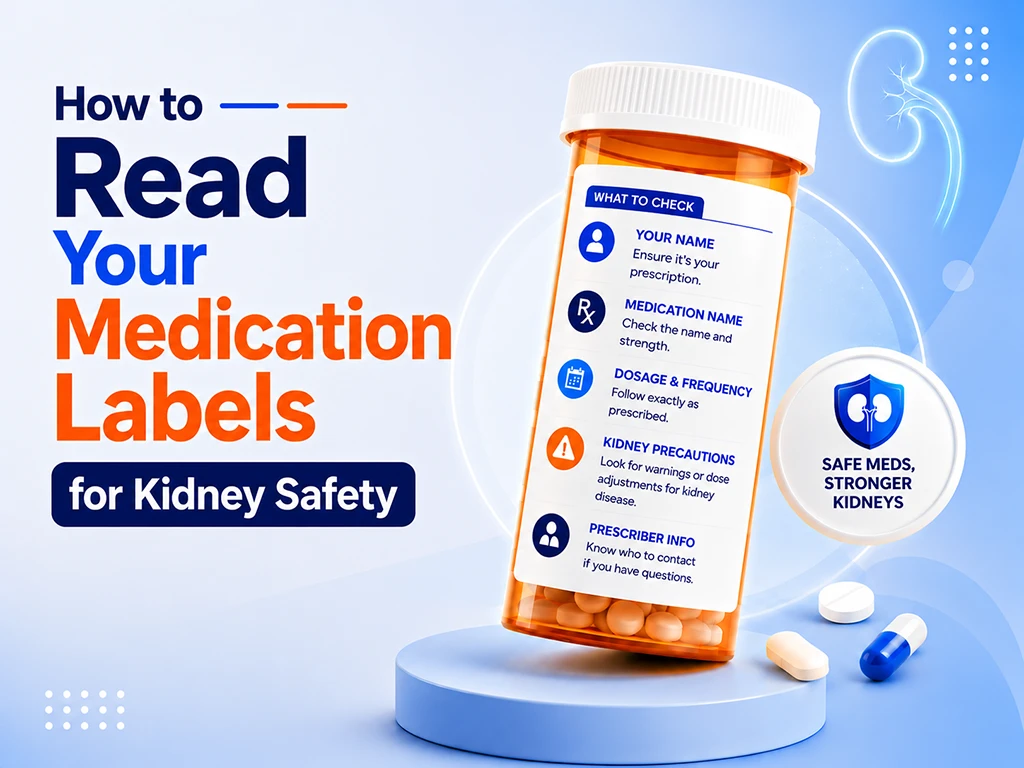
Medication labels contain important information, but they can be confusing, especially if you have kidney disease. Learning how to read medication labels properly can help you avoid ingredients that may harm your kidneys and ensure you’re taking medications safely. Whether you’re picking up a prescription or an over-the-counter (OTC) product, understanding what’s on the label is a key step in protecting your kidney health.
Why Medication Labels Matter
Many medications are filtered through the kidneys. If kidney function is reduced, certain drugs or doses can build up in the body and increase the risk of side effects or kidney injury. Medication labels provide essential details about ingredients, dosing, warnings, and who should avoid the product; information that kidney patients should never skip.
Key Sections to Look for on Medication Labels
Active Ingredients
This is one of the most important sections for kidney safety. If you see an NSAID listed, talk to your healthcare provider before using the medication. What to watch for:
- NSAIDs such as ibuprofen, naproxen, or aspirin (regular or high dose)
- Combination products that include multiple pain relievers
Purpose and Uses
This section explains what the medication is intended to treat. Many products designed for pain, inflammation, or cold and flu symptoms may contain kidney-risk ingredients.
Tip: If multiple products treat the same symptom, choose the one with the fewest active ingredients after checking with your provider.
Warnings
This section is especially important for kidney patients. Look closely for warnings such as:
- “Ask a doctor before use if you have kidney disease.”
- “Do not use with other products containing…”
- “Stop use and ask a doctor if…”
These warnings are there to protect you; don’t ignore them.
Directions (Dosage Instructions)
Always follow the recommended dose. Why this matters:
- Taking more than directed can stress your kidneys
- Doses may need adjustment based on kidney function
- “More” does not mean “more effective” and can be dangerous
If your provider gives you specific dosing instructions, follow those, even if they differ from the label.
Inactive Ingredients
Inactive ingredients can still matter. Some products contain:
- Sodium
- Potassium
- Magnesium
For kidney patients on dietary restrictions, these ingredients may affect fluid balance or lab values. If you’re unsure, ask your healthcare team.
Extra Tips for Reading Labels Safely
- Avoid taking multiple products with the same active ingredient
- Be cautious with “multi-symptom” medications
- Check labels every time, even if you’ve used the product before
- Bring your medications to appointments for review
- Ask before taking herbal or “natural” supplements
When to Ask Your Healthcare Provider
Always check with your care team if:
- You have chronic kidney disease
- You are on dialysis
- You take multiple medications
- You’re unsure about the ingredient or dose
Your nephrology team can help you choose safer alternatives and adjust medications as needed.
Final Thoughts
Reading medication labels may seem like a small step, but it plays a big role in protecting your kidneys. By understanding active ingredients, warnings, and dosing instructions, you can avoid medications that may cause harm and make safer choices for your health.
If something on a label doesn’t make sense, don’t guess; ask. Your healthcare team is there to guide you and help keep your kidneys functioning as well as possible.
Stay informed and take control of your kidney health!

Getting diagnosed with an organ disease can often be one of the scariest moments of Read more

A large percentage of the population suffers from some form of back problems, and if Read more

When it comes to your body, there is a lot of things that can go Read more

Many of us walk around living our day to day lives without even realizing that Read more